This is still in the works. I'm going to populate this on a weekly basis, but it looks like its going to work for the time being.
The reason for the blog format was because of the ease of its formatting features, ability to post video clips, and the ability for students to respond and and for me to leave feedback.
http://animateemotion.blogspot.com/
Showing posts with label My Thesis Construction. Show all posts
Showing posts with label My Thesis Construction. Show all posts
Tuesday, May 20, 2008
Thursday, March 20, 2008
Final Document Setup & Visual Aid Advice
Final Document Setup:
a. Title page
b. Abstract
c. Title page
d. Copyright page
e. Committee and Department Head signatures page
f. Dedication (optional)
g. Acknowledgements (optional but recommended)
h. Table of Contents
i. List of Tables (if 4 or more tables are in text)
j. List of Figures (if 4 or more figures are in text)
Settin up Your Visual Aids
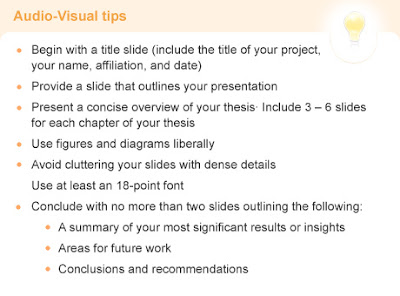
a. Title page
b. Abstract
c. Title page
d. Copyright page
e. Committee and Department Head signatures page
f. Dedication (optional)
g. Acknowledgements (optional but recommended)
h. Table of Contents
i. List of Tables (if 4 or more tables are in text)
j. List of Figures (if 4 or more figures are in text)
Settin up Your Visual Aids

Thursday, March 13, 2008
Website Architecture
I. INTRODUCTION:
The intro will be in HTML, but for the approving committee, it may begin as a Word Document, which will the then proceed to the actual website.
II. CURRICULUM
i. Animating Emotion Overview
ii. “12 Principles of Animation” Overview - How is it used in this presentation?
iii. Animation Process - Keyframing, Positioning, Timing, Detail and Refinement
iv. Importance of Feedback and how it relates to this project.
A. Animation Exercises (11 total). Each exercise will include the following.
1) Assignment Description
2) Lecture and Lessons
3. Pre – Planning
a. Understanding the scene and scene analysis. (Some questions include):
display in order to convey the appropriate mood for the
scene.
c. Intensity - At what intensity are these gestures occurring?
Can the intensity be adjusted to enhance the scene?
d. Research
e. Sketching
The animation process for each exercise is the same, and will be featured it a higher level within the site. This page can serve as a resource for the animation process.
a. Posing and breakdown. Using your sketches and video reference. Block in your poses using the "bookend" technique, and explain how this is done in each exercise.
b. Adjust timing and positioning
c. Add keyframes for:
e. Refinement
5. Evaluation -
A separate section on "evaluation" will be written and presented prior to the presentation of the exercises in the curriculum. A link will be available for students to read this section. Show your animated clip to a peer to get feedback from them.
Personal evaluation can be achieved by answering the following questions.
III. 60.2 Seconds "How to Run Off a Cliff With Style",
An Animated Newsreel : by Randolf Dimalanta
I will be animating this next quarter and is used as an example of what can be done utilizing the techniques presented in this thesis presentation.
All of the animations, as well all of the tutorial found in the curriculum will be presented on a single HTML page.
References
VI. FURTHER STUDY & Other Resources
The intro will be in HTML, but for the approving committee, it may begin as a Word Document, which will the then proceed to the actual website.
- Overview of the Inquiry
- Statement of Intent
- Acknowledgments.
II. CURRICULUM
i. Animating Emotion Overview
ii. “12 Principles of Animation” Overview - How is it used in this presentation?
iii. Animation Process - Keyframing, Positioning, Timing, Detail and Refinement
iv. Importance of Feedback and how it relates to this project.
A. Animation Exercises (11 total). Each exercise will include the following.
1) Assignment Description
2) Lecture and Lessons
- a. Video Tutorials or HTML
- b. Things to watch out for (This is based on my observations and my findings of conducting the exercise myself.
- c. Purpose of this exercise.
- d. Show example of the exercise.
3. Pre – Planning
a. Understanding the scene and scene analysis. (Some questions include):
- What is happening in this scene?
- What is the purpose of this scene?
- What happened to each character before and after this scene?
- What is each character's state of mind
display in order to convey the appropriate mood for the
scene.
c. Intensity - At what intensity are these gestures occurring?
Can the intensity be adjusted to enhance the scene?
d. Research
- Video reference – Personally film, or view video resources to serve as reference for movement and timing in your animation.
- Use the step feature of your computer program to be familiar with frame count.
- Still Imagery or Mirrors - Use a mirror and or a digital camera to capture the emotion in your face.
e. Sketching
- Gesture - Sketch the body positions and expression, use this as a frame of reference when you begin animating.
- Placement - Where are the characters placed in the shot in order to convey the mood clearly?
The animation process for each exercise is the same, and will be featured it a higher level within the site. This page can serve as a resource for the animation process.
a. Posing and breakdown. Using your sketches and video reference. Block in your poses using the "bookend" technique, and explain how this is done in each exercise.
b. Adjust timing and positioning
c. Add keyframes for:
- Anticipation
- Arcs
e. Refinement
- Apply moving holds
- Using the Graph Editor.
5. Evaluation -
A separate section on "evaluation" will be written and presented prior to the presentation of the exercises in the curriculum. A link will be available for students to read this section. Show your animated clip to a peer to get feedback from them.
Personal evaluation can be achieved by answering the following questions.
- Is emotion clearly communicated in the scene through the characters? How can it be improved?
- Can anything be exaggerated?
- Can anything be simplified?
- Can we infer a deeper understanding of the character in the scene?
- Advice from professional animators.
- Common pitfalls for each assignment and workarounds.
III. 60.2 Seconds "How to Run Off a Cliff With Style",
An Animated Newsreel : by Randolf Dimalanta
I will be animating this next quarter and is used as an example of what can be done utilizing the techniques presented in this thesis presentation.
IV. Animation and tutorial gallery:
Format: This will be done in a Quicktime movie file. Or it will be uploaded to a free online server, where the animation could be embedded within an HTML . A nice site that fits right into this presentation is Aniboom.com
All of the animations, as well all of the tutorial found in the curriculum will be presented on a single HTML page.
Format: Mostly quicktime movies or they will be uploaded to a free server where they will be embedded.V. CONCLUSION
References
VI. FURTHER STUDY & Other Resources
- Resources
- Bibliography
- Categorized Websites
- Animator Websites
- Links to Laban Motion Analysis
- Link to Ed Hooks site
- Link to Aniboom Site and other Animation Sites
- Video Reference Sites
Tuesday, February 5, 2008
Curriculum Split
While reading for my thesis writing class, I thought about the curriculum that was developing. Currently, its a series of 9 exercises. This group is directed to the intermediate animation student, and in order to ensure that students were able to follow the final the final assignments, the beginning assignments were designed to review keyframing, posing and the Maya workflow for completing animation.
I thought about developing a second curriculum that was geared towards someone more advanced. This curriculum would not include the bouncing ball, walk or run cycle, but instead will begin with posing exercises or various gear change exercises.
I thought about developing a second curriculum that was geared towards someone more advanced. This curriculum would not include the bouncing ball, walk or run cycle, but instead will begin with posing exercises or various gear change exercises.
Monday, January 28, 2008
Preplanning Concept
Emotion is integral to any character animation endeavor. Without it, there is no connection with the audience and the story suffers. When I started the thesis process, I noticed that there weren’t many resources available for animators in the subject of emotion. There were some books on animating facial features, which I found to be too technical. The closest resource I had found was Ed Hook’s text, “Acting for Animators”. It touched on the deeper aspects of conveying emotion in characters and its connection with the audience. Other than these texts, one would experience this type of instruction inside the industry, where new animators, upon entering a company, will usually undergo a training session where emotion and the proprietary software are covered. Many animators working in the industry have become university instructors where they introduce many of these concepts to students. A good example of this is a website called Animationmentor.com, a private online animation school, where animation students from all over the world take 6 – 10 week classes and learn from professional instructors from Pixar and Dreamworks. The site is popular and many students after taking the course, are recruited to work in the industry. The instruction is only available to a select few, and although it is impossible to get first hand instruction from professional animators, I believe that engaging in these exercises, is a good first step.
For my project, I thought it would benefit everyone by researching the most important aspects of animating character emotion, the exercises to help enhance this and to turn into a curriculum that could be introduced to intermediate animation students. The idea, is that if students were introduced to these concepts while in school, when they graduate, they would have experienced methods, learned concepts and would have examples to demonstrate their understanding and which they could use as part of their professional demo reel. The end result is that these students would be more prepared to take on complicated animation tasks such as animating emotion.
As part of my research, I sent out a questionnaire to professional animators in order to get a better understanding of how emotion is seen and achieved in the industry. The questionnaire was comprised of twenty questions covering education history, mentors, animating workflow techniques, animating emotion and tips and tricks for students. Eleven animators responded and this week, I reviewed all of them to see if I could find a new direction or gap in animating emotion that I have not seen. I noticed something profound. It seems simple, but I think if I focus on it, that it could help students achieve greater results. What I found was that there is a great deal of preliminary cognitive work that has to be done before any animation is started. Simply put, it requires observation and questioning, the conscious implementation of both could make the act of animating emotion simpler.
In almost all of the interviews, when asked to provide a resource that had helped them animate emotion, “observation” came up in over half of the questionnaires. This seemed obvious at first, but it’s the basic task for all artists, all artists must be aware of the world in the way he understands in order to interpret that into a visual expression. In this case, its an animated performance. This includes careful observation of people and objects from life. It also means shooting video reference, and scrubbing through animation clips or movies. Another resource they found essential was the ability to act in front of a camera or mirror. This takes initiative from the student and it places the student in a situation where he has to “feel” the emotion in a character.
Other questions that helped to animate emotion include: What is the state of mind of the character? And what happened to this character in the previous scene? What happens to the character in the following scene? How does this scene play into the overall scheme of the animation? Almost all of the professional animators before working on a scene would ask the above. Once these questions were answered, the animator would have information to add to the scene and could then move to the next step. In this, to solve for emotion the animator proceeds to creating a series of poses in the character that help to convey the story. These poses must be clear enough that even in silhouette form, they would still be readable. These can be drawn then translated on to the CG character, or it can be applied to the CG character directly.
These questions provide clarity into the process. In reading about this, I wondered if there was a way to integrate some sort of exercise where the student would have to consider the state of mind or any previous histories of the character. These can be made up, but I wonder if the implementation of this will make the final performance more engaging and rich. I see this as being an addition to my animation exercises, where every exercise has a section called “Preplanning”. This gives additional value for the user.
In these interviews, we could conclude that “Preplanning” was key to creating great emotion in characters. Professional animators do this naturally as part of their practice. It saves them time, the approval process is smoother and they get a better performance. I see this “Preplanning” as a feature in the presentation of my curriculum. In it, we ask students before animating, to take the time to think of a couple of things before animating. This includes knowing the state of mind of the character, the scene before and after, shooting reference and formalizing clear poses. From experience, I know that some students take the time to preplan, but most do not, and if they do, I have not come across any resources that mention the most effective ways of doing this. Doing so would create better results for the student.
For my project, I thought it would benefit everyone by researching the most important aspects of animating character emotion, the exercises to help enhance this and to turn into a curriculum that could be introduced to intermediate animation students. The idea, is that if students were introduced to these concepts while in school, when they graduate, they would have experienced methods, learned concepts and would have examples to demonstrate their understanding and which they could use as part of their professional demo reel. The end result is that these students would be more prepared to take on complicated animation tasks such as animating emotion.
As part of my research, I sent out a questionnaire to professional animators in order to get a better understanding of how emotion is seen and achieved in the industry. The questionnaire was comprised of twenty questions covering education history, mentors, animating workflow techniques, animating emotion and tips and tricks for students. Eleven animators responded and this week, I reviewed all of them to see if I could find a new direction or gap in animating emotion that I have not seen. I noticed something profound. It seems simple, but I think if I focus on it, that it could help students achieve greater results. What I found was that there is a great deal of preliminary cognitive work that has to be done before any animation is started. Simply put, it requires observation and questioning, the conscious implementation of both could make the act of animating emotion simpler.
In almost all of the interviews, when asked to provide a resource that had helped them animate emotion, “observation” came up in over half of the questionnaires. This seemed obvious at first, but it’s the basic task for all artists, all artists must be aware of the world in the way he understands in order to interpret that into a visual expression. In this case, its an animated performance. This includes careful observation of people and objects from life. It also means shooting video reference, and scrubbing through animation clips or movies. Another resource they found essential was the ability to act in front of a camera or mirror. This takes initiative from the student and it places the student in a situation where he has to “feel” the emotion in a character.
Other questions that helped to animate emotion include: What is the state of mind of the character? And what happened to this character in the previous scene? What happens to the character in the following scene? How does this scene play into the overall scheme of the animation? Almost all of the professional animators before working on a scene would ask the above. Once these questions were answered, the animator would have information to add to the scene and could then move to the next step. In this, to solve for emotion the animator proceeds to creating a series of poses in the character that help to convey the story. These poses must be clear enough that even in silhouette form, they would still be readable. These can be drawn then translated on to the CG character, or it can be applied to the CG character directly.
These questions provide clarity into the process. In reading about this, I wondered if there was a way to integrate some sort of exercise where the student would have to consider the state of mind or any previous histories of the character. These can be made up, but I wonder if the implementation of this will make the final performance more engaging and rich. I see this as being an addition to my animation exercises, where every exercise has a section called “Preplanning”. This gives additional value for the user.
In these interviews, we could conclude that “Preplanning” was key to creating great emotion in characters. Professional animators do this naturally as part of their practice. It saves them time, the approval process is smoother and they get a better performance. I see this “Preplanning” as a feature in the presentation of my curriculum. In it, we ask students before animating, to take the time to think of a couple of things before animating. This includes knowing the state of mind of the character, the scene before and after, shooting reference and formalizing clear poses. From experience, I know that some students take the time to preplan, but most do not, and if they do, I have not come across any resources that mention the most effective ways of doing this. Doing so would create better results for the student.
Sunday, January 20, 2008
Curriculum Class Description & Competencies
Below is a class description for the curriculum I'm developing. One thing to consider is if I have to create variations of the curriculum. I'm thinking about developing one for advanced students, one that does not contain the beginning exercises such as the bouncing ball or walk cycle.
------------
Animating Emotion in CG Characters
This course introduces intermediate animation students to ideas and practices in animating emotion in CG characters. The student will be animating prexisting character rigs and will begin by exploring the animation principles, will then move to pantomime exercises, and will conclude by having the student animate a character monologue/dialogue. Various pre-planning techniques will be reviewed and suggested before every exercise to expand learning.
Course Competencies:
Upon successful completion of the course, the student should be able to:
------------
Animating Emotion in CG Characters
This course introduces intermediate animation students to ideas and practices in animating emotion in CG characters. The student will be animating prexisting character rigs and will begin by exploring the animation principles, will then move to pantomime exercises, and will conclude by having the student animate a character monologue/dialogue. Various pre-planning techniques will be reviewed and suggested before every exercise to expand learning.
Course Competencies:
Upon successful completion of the course, the student should be able to:
- Demonstrate keyframe animation in Maya.
- Become familiar with industry standard exercises to demonstrate emotion in characters.
- Become familiar with various pre-planning processes to enhance emotion in characters.
- Create animation samples that demonstrate emotion animation.
Saturday, October 13, 2007
Assignment 14 or 12 : Gear Change 2 or Animating 4 Emotions
Animating 4 Emotions from randolfd on Vimeo.
This original assignment was to animate a second gearchange different from the first. In all of these assignments, its extremely easy to get too carried away, and to animate more than is needed. Its by far the most difficult thing to overcome that I think will get better through experience. The most simple way to prevent this is through planning.
For this assignment, instead of two emotions, the character is now experiencing 5 emotions: sadness, surprised, fear, inquisitiveness and happiness, followed by pain. I was too deep into the animation before I realized I had done too much. I think its a good example of the 4 emotion assignment that I am supposed to undertake in the next few weeks.
Some tips for this successful completion of this assignement:
Research:
Think of a funny incident that has happened to you, and act it out in front of a video camera. You will use this as reference, and you will watch it step by step so you can get a realistic idea of the timing involved, as well as little nuances in the acting that will give the performance variety and realism.
Planning:
Be sure you are clear which emotions are being portrayed, write these down and stick to them.
Stepping:
Pose your rig in the timeline, making sure that you hold each pose by placing two identical keyframes to hold the pose. 48 frames is a good duration for a pause. Shorter pauses should be 24 frames. These pauses act as periods in the performance which gives the viewer a split second to understand what is going on. In Maya, step these performance so you have a rough idea of timing.
To step your keyframes:
Shift + LC drag you mouse over the frames you want (they should be highlighted red) > RC > Tangents > Stepped.
Animating:
After posing, begin to animate the spine and center of gravity from one emotion to the next. In traditional stage drama, it is part of an actor's training to express oneself from the inside out. In animation, we'll do something similar, let's animate the spine and center of gravity first before doing the limbs and head. This technique adds a natural moving pause to your movement (moving pause link here).
After you have animated the spine, torso and center of gravity, begin to animate the limbs and head. In animating the arm, animate the upper arm first, followed by the elbow, then wrist rotation. At this point, you are animating follow through and overlapping animation, which will make your piece look more realistic.
At this point, its essential to remove the stepping from your playback so you have a better idea of how things are turning out.
Finishing Touches:
Be sure to check your work and seek feedback to improve our work. After more finishing touches, use the graph editor to smooth your animation and to refine your arcs.
Tip:
One thing to keep in mind while animating, is to add a variety of speeds in your animation. Mix fast movement with slow movement. This adds contrast and visual interest to your piece. A good example of this is explained in Victor Navone's blog on Animating 3 speeds.
Click the link below to explore more:
http://www.navone.org/blogger/2007/09/3-speeds.html
Sunday, September 16, 2007
Thesis Part I Completion : Moving Forward
I went through the quarter taking a character animation class, in which we engaged in exercises that when taken in sequence would eventually build skill in animating character emotion.
These were the exercises accomplished this quarter and have been posted in this blog:
The question I encountered this week, is what should the next exercises be. In my thesis proposal, I had planned to do two major assignments that would be developed next quarter, dialogue with a single character, then dialogue between two characters.
I spoke to the animation instructor about it and he felt the dialogue exercises should be last, and that more should be done before being attempting dialogue. These exercises should be attempted below but in an 11 week it might be difficult to teach this to students. An alternative would be teach and develop a curriculum spanning 2 quarters (22 weeks).
These would be the animation assignments I have slated for next quarter.
As an example, please see Rebecca Perez' demo reel, it features many of the assignments mentioned above and its a good example of what I'm striving for. She's a Disney Animator (perhaps Dori knows her) and she accomplished these exercises through the Animation Mentor class.
http://www.wik-id.com/reb/AM/Class2/A12/ALLanims_sm.mov
and
http://www.wik-id.com/reb/AM/Class1/A12/AM_Class1_Anim_comp_sm.mov
I'm wondering what feels the best to you as far as which assignments to go forward with. What do you guys think?
Thanks,
Randolf
These were the exercises accomplished this quarter and have been posted in this blog:
- bouncing ball
- 2 bouncing balls with differing weights
- drink box
- walk cycle
- run cycle
- pantomime
- hip turn
- one emotion
- gear change - two emotions
- creating a demo reel.
The question I encountered this week, is what should the next exercises be. In my thesis proposal, I had planned to do two major assignments that would be developed next quarter, dialogue with a single character, then dialogue between two characters.
I spoke to the animation instructor about it and he felt the dialogue exercises should be last, and that more should be done before being attempting dialogue. These exercises should be attempted below but in an 11 week it might be difficult to teach this to students. An alternative would be teach and develop a curriculum spanning 2 quarters (22 weeks).
- another gear change assignment of different emotions (2 weeks).
- an animation showing 4 emotions (these two would be blocked in pantomimes in the beginning) 3 weeks.
- a body mechanics animation (ie. a character jumping off of a high place or picking up a heavy object). 1 week
- Pantomime animation with 2 people. (1 week)
- Dialogue animation assignment with 1 person. (2 weeks)
- Dialogue animation assignment with 2 people (not sure if there's time for this one - 2 weeks).
These would be the animation assignments I have slated for next quarter.
As an example, please see Rebecca Perez' demo reel, it features many of the assignments mentioned above and its a good example of what I'm striving for. She's a Disney Animator (perhaps Dori knows her) and she accomplished these exercises through the Animation Mentor class.
http://www.wik-id.com/reb/AM/Class2/A12/ALLanims_sm.mov
and
http://www.wik-id.com/reb/AM/Class1/A12/AM_Class1_Anim_comp_sm.mov
I'm wondering what feels the best to you as far as which assignments to go forward with. What do you guys think?
Thanks,
Randolf
Wednesday, August 29, 2007
Thesis Title : How to run off a cliff with style: Teaching emotion and empathy in character animation
After sending out the industry questions yesterday, I realized that I had to revisit my thesis title. The title as of today is:
How to run off a cliff with style: Teaching emotion and empathy in character animation
Wording is very important as it sets the tone for the project, and I realized that I was missing "empathy" in the title. Key definitions are below:
Empathy
1. Direct identification with, understanding of, and vicarious experience of another person's situation, feelings, and motives.
2. The projection of one's own feelings or emotional state onto an object or animal.
"empathy." The American Heritage® Stedman's Medical Dictionary. Houghton Mifflin Company. 02 Jun. 2007. <Dictionary.com http://dictionary.reference.com/browse/empathy>.
Emotion
1. A mental state that arises spontaneously rather than through conscious effort and is often accompanied by physiological changes; a feeling: the emotions of joy, sorrow, reverence, hate, and love.
"emotion." The American Heritage® Dictionary of the English Language, Fourth Edition. Houghton Mifflin Company, 2004. 03 Jun. 2007. <Dictionary.com http://dictionary.reference.com/browse/emotion>.
How to run off a cliff with style: Teaching emotion and empathy in character animation
Wording is very important as it sets the tone for the project, and I realized that I was missing "empathy" in the title. Key definitions are below:
Empathy
1. Direct identification with, understanding of, and vicarious experience of another person's situation, feelings, and motives.
2. The projection of one's own feelings or emotional state onto an object or animal.
"empathy." The American Heritage® Stedman's Medical Dictionary. Houghton Mifflin Company. 02 Jun. 2007. <Dictionary.com http://dictionary.reference.com/browse/empathy>.
Emotion
1. A mental state that arises spontaneously rather than through conscious effort and is often accompanied by physiological changes; a feeling: the emotions of joy, sorrow, reverence, hate, and love.
"emotion." The American Heritage® Dictionary of the English Language, Fourth Edition. Houghton Mifflin Company, 2004. 03 Jun. 2007. <Dictionary.com http://dictionary.reference.com/browse/emotion>.
The Birds Have Flown : Industry Questions Sent Out
I sent out industry questionnaires last night to about 10 animators. The questions are below. The participating animators thus far are noted in the links section with an asterisk...Thanks guys for sharing your work and for helping me with my project.
There are 26 questions total. Many are fast and all are geared for a general overview of professional practices in the industry regarding animation character emotion.
Background:
* Where did you study animation? And how long have you been animating?
* Where do you currently work as an animator?
* What is your primary animation platform? And which software do you use most often?
* What props, toys or objects do you have around your work area to help with inspiration?
* Is there an animation that you have worked on that you are most proud of? Why?
Influence:
* Do you have a favorite animator that you continually draw inspiration from?
* In learning animation, do you have a favorite animation exercise that you consider invaluable? Please describe.
* What are your top 3 favorite animation DVD's? And what reasons do you have to make them the top of your list?
* Mickey Mouse or Bugs Bunny? If neither, who?
Industry Questions:
* Do you specialize in a particular type of animation (i.e. character, realistic, inanimate objects, animals, visual effects shots)?
* How much footage do you choose to work on at any one time (if you are able to choose), and how long do you give yourself to work on this footage?
* Animation is a complex process, what types of questions do you ask yourself in order to clarify what you are about to animate?
* After the above has been established, how do you go about animating?
* Which is your primary software, and is there a feature inherent in the software that you are using that you just love and that you cannot live without? What does it do?
* In what ways do you see the animation industry changing?
* What is the most difficult part of animation?
* What do you love most about what you do?
Animating Emotion:
* How important is emotion to your animations?
* Is there a technique or habit that you employ that helps ensure great emotion animation?
* Have you ever animated something, only to find that people felt something else other than what you had originally intended?
* Have you found a resource that has helped you in become better at animating character emotion?
Advice to Students:
* What is the biggest downfall students make when it comes to presenting their portfolio/demo reel?
* What is the biggest downfall students make when it comes to animating character emotion?
* What type of advice would you give students to improve their abilities in animating character emotion?
* The animation process is long and tedious, and its not unusual for the mind to wander. What do you do stay awake, sharp and focused on your work?
* In order to continue further study on the subject, would you recommend another animator who you know would be interested and available to answer these questions?
There are 26 questions total. Many are fast and all are geared for a general overview of professional practices in the industry regarding animation character emotion.
Background:
* Where did you study animation? And how long have you been animating?
* Where do you currently work as an animator?
* What is your primary animation platform? And which software do you use most often?
* What props, toys or objects do you have around your work area to help with inspiration?
* Is there an animation that you have worked on that you are most proud of? Why?
Influence:
* Do you have a favorite animator that you continually draw inspiration from?
* In learning animation, do you have a favorite animation exercise that you consider invaluable? Please describe.
* What are your top 3 favorite animation DVD's? And what reasons do you have to make them the top of your list?
* Mickey Mouse or Bugs Bunny? If neither, who?
Industry Questions:
* Do you specialize in a particular type of animation (i.e. character, realistic, inanimate objects, animals, visual effects shots)?
* How much footage do you choose to work on at any one time (if you are able to choose), and how long do you give yourself to work on this footage?
* Animation is a complex process, what types of questions do you ask yourself in order to clarify what you are about to animate?
* After the above has been established, how do you go about animating?
* Which is your primary software, and is there a feature inherent in the software that you are using that you just love and that you cannot live without? What does it do?
* In what ways do you see the animation industry changing?
* What is the most difficult part of animation?
* What do you love most about what you do?
Animating Emotion:
* How important is emotion to your animations?
* Is there a technique or habit that you employ that helps ensure great emotion animation?
* Have you ever animated something, only to find that people felt something else other than what you had originally intended?
* Have you found a resource that has helped you in become better at animating character emotion?
Advice to Students:
* What is the biggest downfall students make when it comes to presenting their portfolio/demo reel?
* What is the biggest downfall students make when it comes to animating character emotion?
* What type of advice would you give students to improve their abilities in animating character emotion?
* The animation process is long and tedious, and its not unusual for the mind to wander. What do you do stay awake, sharp and focused on your work?
* In order to continue further study on the subject, would you recommend another animator who you know would be interested and available to answer these questions?
Friday, June 15, 2007
Creating an Abstract
Start first by identifying your thesis. This should be done in a single sentence.
Then answer your thesis by asking these questions:
Then answer your thesis by asking these questions:
- What is the problem or question that the work addresses?
- Why is it important?
- How was the investigation undertaken?
- What was found and what does it mean?
You should find the answers to questions 1 and 2 in your Introduction; the answer to question 3 will be a summary of your Methods; and the answer to question 4 will summarise your Results, Discussion and Conclusion.
Citation:
Monash University Online. 2003. Monash University 15, June 2007. <http://www.monash.edu.au/lls/hdr/write/5.11.html>
Thursday, June 14, 2007
Thesis Components
Checklist for Presentating Your Thesis Proposal
This should contain:
Proposal Components
• Title Page
• Acknowledgments (Optional)
This is where you thank those people who have assisted you to this point in your project.
If you receive a grant from the university or from an outside funding source, you should acknowledge the contributors.
Keep it sincere, but keep it short and simple.
• Lists of Tables, Illustrations, Abbreviations, and Symbols (if applicable)
• Table of Contents
Write the Table of Contents after you have completed your entire proposal.
Double check page numbers for accuracy.
Title of the Study
o Include a working title for your proposal. This title may change as you move through the research process. The recommended length for the title is 10 to 12 words.
• Introduction
The introduction provides an orientation for the reader. It announces the topic you intend to investigate and often states the purpose of the study, provides a brief overview of the content, describes the organization of the study, and provides some background in order to place the study in appropriate context.
• Overview of the Inquiry
This overview is a brief synopsis of the study. This serves to further orient the reader to what will follow. It presents a general description of the line of inquiry you will pursue. It also presents the tentative arguments you intend to pose.
• Statement of Intent
This section of the proposal states the overall purpose of the study. It may also describe the significance of the study for a particular audience or group. This is where you will talk about how you think your master’s thesis will relate to your major MFA artistic project.
• Guiding Research Questions
Your research questions will provide the conceptual layout for the entire study. Some of the questions you may want to include are:
• Review of Relevant Discourses
These discourses may be scholarly literature. However, you may include other types of discourse if you think they may shed light on your project or help you make your point. Other types of discourse may include books, critical reviews, journals, mass media, policy documents, correspondence, position papers, and other relevant pieces of writing related to your study.
• Research Procedures
Describe what you believe you will have to do to complete the creative project and the thesis. This section will describe the “who, what, when, where, why, and how” of your research study. This section will be brief and will describe your overall plan for conducting the thesis research.
• Anticipated Portrayals (Narratives, Descriptions, Examples, etc.)
Here you will describe the type of information you will provide to support your discussion. For example, you may use personal narratives, critiques, interview summaries, or other formats.
• Tentative Outline of Thesis Chapters
You might consider listing the title and anticipated purpose of each of your chapters. Following the listing, you may want to include a description of the types of information you will use to support your arguments or discussion. Placing such information together in one section helps to bring the details of your study into sharper focus.
• Tentative Schedule For Completing the Thesis Research
You probably will include in this section your best guesses about when you intend to complete the various tasks involved in completing your study and your creative project. Remember that nothing is cast in stone at this point.
Online Lectures © 2005 Miami International University of Art & Design
This should contain:
- the abstract
- the hypothesis
- the theoretical perspective
- reflections of the evolution of your project
- and conclusions.
Proposal Components
• Title Page
- NAME OF YOUR UNIVERSITY
- TITLE OF YOUR STUDY
- A THESIS SUBMITTED TO THE GRADUATE SCHOOL
- IN PARTIAL FULFILLMENT OF THE REQUIREMENTS
- FOR THE DEGREE
- MASTER OF FINE ARTS
- YOUR DEPARTMENT NAME
- BY YOUR NAME
- © 2005 Your Name
• Acknowledgments (Optional)
This is where you thank those people who have assisted you to this point in your project.
If you receive a grant from the university or from an outside funding source, you should acknowledge the contributors.
Keep it sincere, but keep it short and simple.
• Lists of Tables, Illustrations, Abbreviations, and Symbols (if applicable)
• Table of Contents
Write the Table of Contents after you have completed your entire proposal.
Double check page numbers for accuracy.
Title of the Study
o Include a working title for your proposal. This title may change as you move through the research process. The recommended length for the title is 10 to 12 words.
• Introduction
The introduction provides an orientation for the reader. It announces the topic you intend to investigate and often states the purpose of the study, provides a brief overview of the content, describes the organization of the study, and provides some background in order to place the study in appropriate context.
• Overview of the Inquiry
This overview is a brief synopsis of the study. This serves to further orient the reader to what will follow. It presents a general description of the line of inquiry you will pursue. It also presents the tentative arguments you intend to pose.
• Statement of Intent
This section of the proposal states the overall purpose of the study. It may also describe the significance of the study for a particular audience or group. This is where you will talk about how you think your master’s thesis will relate to your major MFA artistic project.
• Guiding Research Questions
Your research questions will provide the conceptual layout for the entire study. Some of the questions you may want to include are:
- How does my studio project relate to my previous coursework and to my own personal reading and research?
- What are the questions I am trying to answer by completing the project?
- What problem am I trying to solve?
- What do I want others to learn from my project?
• Review of Relevant Discourses
These discourses may be scholarly literature. However, you may include other types of discourse if you think they may shed light on your project or help you make your point. Other types of discourse may include books, critical reviews, journals, mass media, policy documents, correspondence, position papers, and other relevant pieces of writing related to your study.
• Research Procedures
Describe what you believe you will have to do to complete the creative project and the thesis. This section will describe the “who, what, when, where, why, and how” of your research study. This section will be brief and will describe your overall plan for conducting the thesis research.
• Anticipated Portrayals (Narratives, Descriptions, Examples, etc.)
Here you will describe the type of information you will provide to support your discussion. For example, you may use personal narratives, critiques, interview summaries, or other formats.
• Tentative Outline of Thesis Chapters
You might consider listing the title and anticipated purpose of each of your chapters. Following the listing, you may want to include a description of the types of information you will use to support your arguments or discussion. Placing such information together in one section helps to bring the details of your study into sharper focus.
• Tentative Schedule For Completing the Thesis Research
You probably will include in this section your best guesses about when you intend to complete the various tasks involved in completing your study and your creative project. Remember that nothing is cast in stone at this point.
Online Lectures © 2005 Miami International University of Art & Design
Thursday, May 3, 2007
Thesis Intent & Significance
What is the intent of your study? What significance does your study have for a particular audience?
I’m going to stick my neck out here…I’m a little nervous in sharing this, but I’m compelled to share my strongest feeling/reason for the intent of this study. Some of it will be included in my thesis, but I know that eventually it has to be presented in such a way that one will be able to see the greater good. It sounds selfish at first, but as I read this again, its not that bad. I’m considering this as a form of catharsis…let the healing begin.
I want to get better! I have been teaching classes in the Media Arts and Animation Department in our school for over a year since I requested that I switch groups from being a graphic designer to an animator. I thought it was better fit and it is. In teaching animation students however, I don’t have the experience of working in an animation studio or small animation production house to be able to instruct my students in the way I would like, but I do my best. Being in this program has made my classes better, and with the development of this thesis, I hope to make a greater impact.
I want this study to not only give me the experience and samples needed to be a better animation instructor, but to also enrich my understanding of how animation could be used to effectively convey character emotion and understanding (intersubjectivity). It creates connectedness between the character and the audience, which is key as it inevitably drives stories produced for feature film, video game and television.
As an instructor, I want to develop curriculum that would help students develop these marketable skills not only for the students’ benefit, but to improve the industry by providing a solid accessible foundation for animating characters’ emotion and understanding by the viewer.
The audience who would benefit from this would be intermediate to advanced level animators and instructors who want to improve their skills in animating emotion, animation students, independent animators and newly hired animators.
I’m going to stick my neck out here…I’m a little nervous in sharing this, but I’m compelled to share my strongest feeling/reason for the intent of this study. Some of it will be included in my thesis, but I know that eventually it has to be presented in such a way that one will be able to see the greater good. It sounds selfish at first, but as I read this again, its not that bad. I’m considering this as a form of catharsis…let the healing begin.
I want to get better! I have been teaching classes in the Media Arts and Animation Department in our school for over a year since I requested that I switch groups from being a graphic designer to an animator. I thought it was better fit and it is. In teaching animation students however, I don’t have the experience of working in an animation studio or small animation production house to be able to instruct my students in the way I would like, but I do my best. Being in this program has made my classes better, and with the development of this thesis, I hope to make a greater impact.
I want this study to not only give me the experience and samples needed to be a better animation instructor, but to also enrich my understanding of how animation could be used to effectively convey character emotion and understanding (intersubjectivity). It creates connectedness between the character and the audience, which is key as it inevitably drives stories produced for feature film, video game and television.
As an instructor, I want to develop curriculum that would help students develop these marketable skills not only for the students’ benefit, but to improve the industry by providing a solid accessible foundation for animating characters’ emotion and understanding by the viewer.
The audience who would benefit from this would be intermediate to advanced level animators and instructors who want to improve their skills in animating emotion, animation students, independent animators and newly hired animators.
Thesis Questions:
Below is my tentative thesis title which served as my focal point from which I will base my objectives. I then broke down this title into different components which served as a starting point for generating questions. Some of the questions are accompanied by a few personal thoughts that I think would lead to more helpful questions, and so that I would not forget them.
Tentative Thesis Title:
“Animating Emotion and Intersubjectivity: How to run off a cliff with style”
1) Why is animation important and who benefits from it?
2) What are some of the trends in animation?
3) What are some of the problems with animation today?
4) How is “emotion” defined by animation?
EMOTION & INTERSUBJECTIVITY :
5) In what ways is “emotion” important? What’s a good example of this?
6) What is intersubjectivity? What’s a good example of this?
7) How does intersubjectivity relate to emotion? Are both possible to accomplish at the same time? What are good examples of this?
8) How is emotion expressed in characters?
8B) How are the “12 Principles of Animation” helpful in animating emotion?
9) How is facial structure, gesture, body language, hands and shapes used to express emotion?
10) What are some best practices used for stage plays and drama that help convey emotion? Are there any theses or studies about this?
11) How does timing affect emotion?
12) Who are some examples of animators (past and present) that are expert in animating emotion?
13) What are some of these animators doing today, and how is there knowledge of emotion help them with their work?
14) What are some of the components that make intersubjectivity possible?
Some examples include: Eye contact, sharing of common experiences, scene set up, character appearance, character and scene lighting, and timing.
15) Which is more important: emotion or intersubjectivity? Or is one part of the other?
I think successful emotive animation leads to intersubjectivity, but I’m investigating to see if it could go the other way around.
16) Where is this leading animation into the future?
WORKSHOP
17) What character models am I going to use? Where am I going to get these?
How much do these cost? And who do I got to treat?
18) Are these random exercises or do all of these excercises culminate towards a final animation?
19) How complex or simple should these exercises be?
TEACHING
20) How should these workshops be structured so that an intermediate student can learn these techniques? And in which order should they be presented.
21) How many workshops / exercises should I have? And how should each be designed and presented?
22) Should I include an evaluation process for teachers to use?
I probably should include some.
23) What are some common mistakes that students and instructors should watch out for in executing the exercises.
SHARING & DOCUMENTATION
19) What’s the best way to document my thoughts and progress?
21) How do I make it accessible to everyone interested so that it helps the larger community?
I thought about creating a website where all of this would be made available. It could then be accessed by all animation schools, and companies to be used for artistic creative renewal and improvement of animation skills for beginning entry level animators.
If the models are available for public use, then documentation for how to use them should also be created. What does this include?
Tentative Thesis Title:
“Animating Emotion and Intersubjectivity: How to run off a cliff with style”
1) Why is animation important and who benefits from it?
2) What are some of the trends in animation?
3) What are some of the problems with animation today?
4) How is “emotion” defined by animation?
EMOTION & INTERSUBJECTIVITY :
5) In what ways is “emotion” important? What’s a good example of this?
6) What is intersubjectivity? What’s a good example of this?
7) How does intersubjectivity relate to emotion? Are both possible to accomplish at the same time? What are good examples of this?
8) How is emotion expressed in characters?
8B) How are the “12 Principles of Animation” helpful in animating emotion?
9) How is facial structure, gesture, body language, hands and shapes used to express emotion?
10) What are some best practices used for stage plays and drama that help convey emotion? Are there any theses or studies about this?
11) How does timing affect emotion?
12) Who are some examples of animators (past and present) that are expert in animating emotion?
13) What are some of these animators doing today, and how is there knowledge of emotion help them with their work?
14) What are some of the components that make intersubjectivity possible?
Some examples include: Eye contact, sharing of common experiences, scene set up, character appearance, character and scene lighting, and timing.
15) Which is more important: emotion or intersubjectivity? Or is one part of the other?
I think successful emotive animation leads to intersubjectivity, but I’m investigating to see if it could go the other way around.
16) Where is this leading animation into the future?
WORKSHOP
17) What character models am I going to use? Where am I going to get these?
How much do these cost? And who do I got to treat?
18) Are these random exercises or do all of these excercises culminate towards a final animation?
19) How complex or simple should these exercises be?
TEACHING
20) How should these workshops be structured so that an intermediate student can learn these techniques? And in which order should they be presented.
21) How many workshops / exercises should I have? And how should each be designed and presented?
22) Should I include an evaluation process for teachers to use?
I probably should include some.
23) What are some common mistakes that students and instructors should watch out for in executing the exercises.
SHARING & DOCUMENTATION
19) What’s the best way to document my thoughts and progress?
21) How do I make it accessible to everyone interested so that it helps the larger community?
I thought about creating a website where all of this would be made available. It could then be accessed by all animation schools, and companies to be used for artistic creative renewal and improvement of animation skills for beginning entry level animators.
If the models are available for public use, then documentation for how to use them should also be created. What does this include?
Wednesday, April 25, 2007
Possible Thesis Titles
1) Teaching Emotion and Intersubjectivity in Animated Characters.
2) Animation Students: Make People Laugh Without Saying a Word
3) Squash and Stretch: Teaching Emotion and Intersubjectivity
4) Animated Emotion & Intersubjectivity: How to Run Off a Cliff with a Style
5) The Official ACME Animation Emotion and Intersubjectivity Guide
2) Animation Students: Make People Laugh Without Saying a Word
3) Squash and Stretch: Teaching Emotion and Intersubjectivity
4) Animated Emotion & Intersubjectivity: How to Run Off a Cliff with a Style
5) The Official ACME Animation Emotion and Intersubjectivity Guide
Tuesday, April 24, 2007
Purpose of the "Introduction" & "Overview"
It orients readers to the purpose and organization of the thesis document: The way you craft the components of your introduction will depend on a number of factors, including your writing style and ability, the nature of your study, and the logical demands of the argument you are trying to make. Providing a good introduction also involves finding the right flow for presenting all the points. Within that flow, your readers will gain insight into the thinking behind the study, get an idea of how the study is organized, gain awareness of what to anticipate, and obtain clarity regarding the assumptions of the study. This will help them evaluate your arguments as they read further.
It begins to frame the study: The introduction gradually unveils the picture the document is to portray. Once readers have got a general sense of the whole document and made logical categories for the information that is to follow, they will be able to focus on the details that appear later in the text.
It provides a rationale for the study: In addition to giving the reader an overall sense of what the study is about, the introduction relates how the study is significant and how it was/will be conducted. It also provides a conceptual background from a personal perspective, i.e., “What brought the researcher to this study?” “Why did the researcher find it compelling?” and so forth.
It provides details about your personal background: In doing so, you form a backdrop for the intent of the study. You can accomplish this by inserting in the introduction components from your Personal Research Profile and other information related to your research journey. This is where you establish a conceptual bridge between your personal interests and the content / context / focus of your study.
Thesis Research and Writing Methodologies. Online Lectures. Miami Intenational University
April 24, 2007.
The Overview
The overview accomplishes specific tasks within the confines of about 200 words. First of all, it frames the study, succinctly describes it, and notes the study’s intent. In addition, the overview flags the mode of inquiry stating whether your study falls into the category of personal narrative, critical inquiry, text analysis, or some other form. The overview concisely summarizes key procedural issues and provides information on the “who, what, when, where, why, and how” of your study. It is usually no more than three paragraphs in length. In these paragraphs, the overview tells the reader:
- Why the study is important
- Who will be involved in the study
- Who will be interested in the results
- What the logistics of the study will be
Most researchers write the overview after the proposal has been completed and then insert this synopsis in an appropriate spot within the document. For proposals in this class, you should incorporate the overview near the beginning of the document. One way to get the feel of what an overview should contain would be to peruse the abstracts for some of the theses and dissertations you retrieve.
Thesis Research and Writing Methodologies. Online Lectures. Miami Intenational UniversityApril 24, 2007.

Saturday, April 21, 2007
Thesis Rough: Teaching Emotion and Intersubjectivity in Animated Characters
THESIS:
Teaching Emotion and Intersubjectivity in Animated Characters
INTRODUCTION:
My goal in exploring this thesis is two fold and they are related to my passion for both teaching and animation. One, is to develop curriculum that introduces and refines animation students' abilities, through industry standard exercises that teach animating emotion and intersubjectivity in characters. This curriculum would be geard towards intermediate to upper level students who are currently pursuing a career in animation in the video game, television or feature animation industries. Second, is for me to acquire and undergo these same exercises not only to gain experience and marketable skills within those fields, but to create examples that would serve the curriculum as a teaching aid.
Another vital component of this project is that it stresses fundamental theories and practices needed in the industry which the student needs be familiar with in entering the industry. For example "The 12 Principles of Animation", the preproduction process (research, sketches, storyboarding, keyframe planning), and industry standard workflows that the student will experience in this type of work.
The project when complete, will better prepare students entering a career in animation, by giving them the opportunity to practice industry standard workflows and will give them examples to be used in a professional demo reel.
EMOTION and INTERSUBJECTIVITY
Merriam Webster Online defines "emotion" :
1) a. the affective aspect of consciousness : FEELING. b : a state of feeling c : a conscious mental reaction (as anger or fear) subjectively experienced as strong feeling usually directed toward a specific object and typically accompanied by physiological and behavioral changes in the body.
It also defines "intersubjectivity" as:
1 : involving or occurring between separate conscious minds
2 : accessible to or capable of being established for two or more subjects :
The Importance of Emotion and Intersubjectivity
Animating emotion and gesture is important to conveying character emotion in video game, television and feature film animation. Emotion creates empathy and believability for a character which helps drive the story. Emotion is used when characters experience events in a story and it is through emotion that a viewer can empathize and engage in a story.
Intersubjectivity is the connection between the animator and the audience on a surface level. This not only involves animation or conveying emotion in a character, but also pertains to how a character is presented or staged. A stronger connection is made when both work togehter, and with this, the animator can guide the viewer. This leads to a deeper understanding of the character, which can lead to better story telling through anticipation or comedy, where in the viewer's understanding is switched.
Having an intermediate or even mastery level of being able to animate emotion makes one going into the field more marketable than someone who is not.
CURRENT PRACTICE:
Currently, intermediate to advanced level students entering the field take one or two classes on animating characters, which focuses on general movement and some emotion. I have found that not enough time is spent, on animating or portraying characterization utilizing emotion and intersubjectivity in schools primarily because of lack of time. Most of the time spent on this level is used to generate models that feature lighting, detail and rendering. Animating emotion is usually practiced while working in the field, or at the Masters education level. Many of these skills can be learned however early on in order to move the student forward. This project will create curriculum that is streamlined and effective in teaching these principles, which could be implemented in those programs that currently implement a quick timeline.
WHAT CAN BE GAINED:
An easy to follow curriculum as well as simple assignments and plans for the student and instructor, broken down in understandable components will be developed. This will help the student understand and practice animating emotion and intersubjectivity. It will also give them practice in fundamental animation principles, as well as experience in traditional and software workflow needed for the field. It will help generate numerous examples that the student could then include in a marketable and professional demo reel portfolio.
On a personal level, it will give me experience in teaching character animation and production in all levels beginning to advanced.
THE CURRICULUM
Importance of Planning
1) Lecture on Research : Ways to research, where and the importance of using visual reference.
2) Lecture on Sketching: Using sketch to help analyze and plan.
3) Lecture on Keyframing and Main Poses : How its used in the industry and how its used to save time.
Teaching Emotion
1) Lecture on "Emotion" : What is it and why is it beneficial for characters - Discussion.
2) Lecture: Emotion thru Gesture and body language
3) Lecture: Emotion thru Facial Animation
4) Lecture: Emotion thru Hands
Teaching Intersubjectivity
1) Defining Intersubjectivity and Examples
2) Lecture : Staging and the Importance of the Silhouette
3) Lecture : Characterization thru texturing, lighting and rendering
4) Lecture : Visual Effects and Characterizations
The Animation Workshop :
Below are the various exercises that will be implemented. Each will include lectures, demonstrations through procedural handouts, and will include sketching and planning sessions.
1) Animating personality in a ball
Lecture : "12 Principles of Animation" Overview
2) Animating personality with two balls.
one of a different weight and material
Lecture: Physics of materials overview
3) Animating Emotion : Face Only
The student is given a rigged character and is assigned to animate various emotions (5 total). Each is given a frame limit. Possible emotions emotions include: elation, anger, sadness, boredom, inquisitiveness.
Lectures include: Muscles of the face, Face and Emotion Dynamics
3B) Animating Emotion : Full Body
The student is given a rigged character and is assigned to animate various emotions (5 total). Each is given a frame limit.
Lecture: Gesture and emotion, Emotion and Hands, Staging
4) Gear Change
Animate 1 emotion, followed by a quick event which then leads to another emotion.
The student will animate 2 gear changes. One of the face, the other of the entire body.
Lecture: Types of transitions.
5) Animate a unique walk cycle
This walk cycle must convey a unique emotion.
Lecture: Walk cycle mechanics, Examples of great unique walk cycles.
6) Animating Character and Weight
Animate a character pushing or pulling a heavy object.
7) Animate two characters engaging in dialogue
8) Convey the emotion of a character through desgin, lighting, texturing, staging, environment and visual effects only. (I'm thinking that this may be a good first assignment).
9) Animate the above character utilizing any of the animation examples as reference. This assignment combines exercise 8 with any of the exercises 1 - 7.
DOCUMENTATION:
While each workshop is being conducted. I will be documenting the steps in a handout format, which could also be published to a website. Procedural steps will be listed as well as an evaluation process for the instructor, sample syllabi, and "Trips and Falls" section for each, listing common pitfalls and how to fix them.
SUPPORT:
To help me with the above mentioned animation workshop, I will need the expertise of the following individuals, many of which have done these assignment and who are professionals in the field.
• Ruel Pascual: Animator / Animation Instructor
Has animated for Pixar, Disney and Blurr Studios and teaches advanced animation classes at the Art Institute of Las Vegas.
• Rocky Bright Jr. : Animator / Animation Instructor
Teaches advanced animation at the Art Institute of Las Vegas.
• Lee Lanier : Modeler, texturer and animator
Lee has done work for Dreamworks Studios and he teaches advanced animation at the Art Institute of Las Vegas.
The following are professionals in the field that I have yet to make contact with. I'm hoping that engaging in research through this MFA thesis will open communication with these professionals. I'm confident that it will. I've made initial contact with many of them.
• Jean Denis Haas :
Animator for Industrial Light and Magic and Pixar Studios
http://www.jeandenis.net/
• Nick Navone
Animator for Pixar Studios
http://www.navone.org
• Bobby Boombeck
Animator for Pixar Studios
http://www.bobbyboombeck.com/index2.html
• David Chai
• Animation Professor San Jose State University and Director of Thunderbean Animation. http://www.thunderbeananimation.com/
• Melvin Tan
Professional Animator
http://www.melvin-tan.net/#
RESOURCES
Trade Publications
• HDRI 3D: http://www.hdri3d.com/
• 3D World: http://www.3dworldmag.com/
• Animation Magazine: http://www.animationmagazine.net/
• Computer Graphics World : http://www.cgw.com/ME2/Default.asp
Texts
• "Animation from Pencil to Pixels" by Tony White
• "Animating Facial Features and Expressions" by David Kalwick
• "Animation Motion Capture Guide" by Matt Liverman
• "Digital Character Animation" by George Maestri
• "Human Modeling and Animation" Peter Ratner
CONCLUSION
Preparing an MFA thesis in a subject matters that I'm passionate about, teaching and animation is an extreme privilege. I am not only gaining experience to be marketable in this competitive field, but that I am helping others to do the same. It helps the field of computer animation by helping to create entry level students who are more prepared and experienced with character acting.
Teaching Emotion and Intersubjectivity in Animated Characters
INTRODUCTION:
My goal in exploring this thesis is two fold and they are related to my passion for both teaching and animation. One, is to develop curriculum that introduces and refines animation students' abilities, through industry standard exercises that teach animating emotion and intersubjectivity in characters. This curriculum would be geard towards intermediate to upper level students who are currently pursuing a career in animation in the video game, television or feature animation industries. Second, is for me to acquire and undergo these same exercises not only to gain experience and marketable skills within those fields, but to create examples that would serve the curriculum as a teaching aid.
Another vital component of this project is that it stresses fundamental theories and practices needed in the industry which the student needs be familiar with in entering the industry. For example "The 12 Principles of Animation", the preproduction process (research, sketches, storyboarding, keyframe planning), and industry standard workflows that the student will experience in this type of work.
The project when complete, will better prepare students entering a career in animation, by giving them the opportunity to practice industry standard workflows and will give them examples to be used in a professional demo reel.
EMOTION and INTERSUBJECTIVITY
Merriam Webster Online defines "emotion" :
1) a. the affective aspect of consciousness : FEELING. b : a state of feeling c : a conscious mental reaction (as anger or fear) subjectively experienced as strong feeling usually directed toward a specific object and typically accompanied by physiological and behavioral changes in the body.
It also defines "intersubjectivity" as:
1 : involving or occurring between separate conscious minds
2 : accessible to or capable of being established for two or more subjects :
The Importance of Emotion and Intersubjectivity
Animating emotion and gesture is important to conveying character emotion in video game, television and feature film animation. Emotion creates empathy and believability for a character which helps drive the story. Emotion is used when characters experience events in a story and it is through emotion that a viewer can empathize and engage in a story.
Intersubjectivity is the connection between the animator and the audience on a surface level. This not only involves animation or conveying emotion in a character, but also pertains to how a character is presented or staged. A stronger connection is made when both work togehter, and with this, the animator can guide the viewer. This leads to a deeper understanding of the character, which can lead to better story telling through anticipation or comedy, where in the viewer's understanding is switched.
Having an intermediate or even mastery level of being able to animate emotion makes one going into the field more marketable than someone who is not.
CURRENT PRACTICE:
Currently, intermediate to advanced level students entering the field take one or two classes on animating characters, which focuses on general movement and some emotion. I have found that not enough time is spent, on animating or portraying characterization utilizing emotion and intersubjectivity in schools primarily because of lack of time. Most of the time spent on this level is used to generate models that feature lighting, detail and rendering. Animating emotion is usually practiced while working in the field, or at the Masters education level. Many of these skills can be learned however early on in order to move the student forward. This project will create curriculum that is streamlined and effective in teaching these principles, which could be implemented in those programs that currently implement a quick timeline.
WHAT CAN BE GAINED:
An easy to follow curriculum as well as simple assignments and plans for the student and instructor, broken down in understandable components will be developed. This will help the student understand and practice animating emotion and intersubjectivity. It will also give them practice in fundamental animation principles, as well as experience in traditional and software workflow needed for the field. It will help generate numerous examples that the student could then include in a marketable and professional demo reel portfolio.
On a personal level, it will give me experience in teaching character animation and production in all levels beginning to advanced.
THE CURRICULUM
Importance of Planning
1) Lecture on Research : Ways to research, where and the importance of using visual reference.
2) Lecture on Sketching: Using sketch to help analyze and plan.
3) Lecture on Keyframing and Main Poses : How its used in the industry and how its used to save time.
Teaching Emotion
1) Lecture on "Emotion" : What is it and why is it beneficial for characters - Discussion.
2) Lecture: Emotion thru Gesture and body language
3) Lecture: Emotion thru Facial Animation
4) Lecture: Emotion thru Hands
Teaching Intersubjectivity
1) Defining Intersubjectivity and Examples
2) Lecture : Staging and the Importance of the Silhouette
3) Lecture : Characterization thru texturing, lighting and rendering
4) Lecture : Visual Effects and Characterizations
The Animation Workshop :
Below are the various exercises that will be implemented. Each will include lectures, demonstrations through procedural handouts, and will include sketching and planning sessions.
1) Animating personality in a ball
Lecture : "12 Principles of Animation" Overview
2) Animating personality with two balls.
one of a different weight and material
Lecture: Physics of materials overview
3) Animating Emotion : Face Only
The student is given a rigged character and is assigned to animate various emotions (5 total). Each is given a frame limit. Possible emotions emotions include: elation, anger, sadness, boredom, inquisitiveness.
Lectures include: Muscles of the face, Face and Emotion Dynamics
3B) Animating Emotion : Full Body
The student is given a rigged character and is assigned to animate various emotions (5 total). Each is given a frame limit.
Lecture: Gesture and emotion, Emotion and Hands, Staging
4) Gear Change
Animate 1 emotion, followed by a quick event which then leads to another emotion.
The student will animate 2 gear changes. One of the face, the other of the entire body.
Lecture: Types of transitions.
5) Animate a unique walk cycle
This walk cycle must convey a unique emotion.
Lecture: Walk cycle mechanics, Examples of great unique walk cycles.
6) Animating Character and Weight
Animate a character pushing or pulling a heavy object.
7) Animate two characters engaging in dialogue
8) Convey the emotion of a character through desgin, lighting, texturing, staging, environment and visual effects only. (I'm thinking that this may be a good first assignment).
9) Animate the above character utilizing any of the animation examples as reference. This assignment combines exercise 8 with any of the exercises 1 - 7.
DOCUMENTATION:
While each workshop is being conducted. I will be documenting the steps in a handout format, which could also be published to a website. Procedural steps will be listed as well as an evaluation process for the instructor, sample syllabi, and "Trips and Falls" section for each, listing common pitfalls and how to fix them.
SUPPORT:
To help me with the above mentioned animation workshop, I will need the expertise of the following individuals, many of which have done these assignment and who are professionals in the field.
• Ruel Pascual: Animator / Animation Instructor
Has animated for Pixar, Disney and Blurr Studios and teaches advanced animation classes at the Art Institute of Las Vegas.
• Rocky Bright Jr. : Animator / Animation Instructor
Teaches advanced animation at the Art Institute of Las Vegas.
• Lee Lanier : Modeler, texturer and animator
Lee has done work for Dreamworks Studios and he teaches advanced animation at the Art Institute of Las Vegas.
The following are professionals in the field that I have yet to make contact with. I'm hoping that engaging in research through this MFA thesis will open communication with these professionals. I'm confident that it will. I've made initial contact with many of them.
• Jean Denis Haas :
Animator for Industrial Light and Magic and Pixar Studios
http://www.jeandenis.net/
• Nick Navone
Animator for Pixar Studios
http://www.navone.org
• Bobby Boombeck
Animator for Pixar Studios
http://www.bobbyboombeck.com/index2.html
• David Chai
• Animation Professor San Jose State University and Director of Thunderbean Animation. http://www.thunderbeananimation.com/
• Melvin Tan
Professional Animator
http://www.melvin-tan.net/#
RESOURCES
Trade Publications
• HDRI 3D: http://www.hdri3d.com/
• 3D World: http://www.3dworldmag.com/
• Animation Magazine: http://www.animationmagazine.net/
• Computer Graphics World : http://www.cgw.com/ME2/Default.asp
Texts
• "Animation from Pencil to Pixels" by Tony White
• "Animating Facial Features and Expressions" by David Kalwick
• "Animation Motion Capture Guide" by Matt Liverman
• "Digital Character Animation" by George Maestri
• "Human Modeling and Animation" Peter Ratner
CONCLUSION
Preparing an MFA thesis in a subject matters that I'm passionate about, teaching and animation is an extreme privilege. I am not only gaining experience to be marketable in this competitive field, but that I am helping others to do the same. It helps the field of computer animation by helping to create entry level students who are more prepared and experienced with character acting.
Animation Workshop
1) Animating personality in a ball
Lecture : "12 Principles of Animation" Overview
2) Animating personality with two balls.
one of a different weight and material
Lecture: Physics of materials overview
3) Animating emotion Face Only
The student is given a rigged character and is assigned to animate various emotions (5 total). Each is given a frame limit.
Lectures include: Muscles of the face, Face and Emotion Dynamics
3B) Animate emotion Full Body
The student is given a rigged character and is assigned to animate various emotions (5 total). Each is given a frame limit.
Lecture: Gesture and emotion, Emotion and Hands, Staging
4) Gear Change
Animate 1 emotion, followed by a quick event which then leads to another emotion.
The student will animate 2 gear changes. One of the face, the other of the entire body.
Lecture: Types of transitions
5) Animate a unique walk cycle
This walk cycle must convey a unique emotion.
Lecture: Walk cycle mechanics, Examples of great unique walk cycles.
6) Animating Character and Weight
Animate a character pushing or pulling a heavy object.
7) Animate two characters engaging in dialogue
8) Convey the emotion of a character through lighting, texturing, staging, environment and visual effects only.
9) Animate the above character utilizing any of the animation examples as reference.
Lecture : "12 Principles of Animation" Overview
2) Animating personality with two balls.
one of a different weight and material
Lecture: Physics of materials overview
3) Animating emotion Face Only
The student is given a rigged character and is assigned to animate various emotions (5 total). Each is given a frame limit.
Lectures include: Muscles of the face, Face and Emotion Dynamics
3B) Animate emotion Full Body
The student is given a rigged character and is assigned to animate various emotions (5 total). Each is given a frame limit.
Lecture: Gesture and emotion, Emotion and Hands, Staging
4) Gear Change
Animate 1 emotion, followed by a quick event which then leads to another emotion.
The student will animate 2 gear changes. One of the face, the other of the entire body.
Lecture: Types of transitions
5) Animate a unique walk cycle
This walk cycle must convey a unique emotion.
Lecture: Walk cycle mechanics, Examples of great unique walk cycles.
6) Animating Character and Weight
Animate a character pushing or pulling a heavy object.
7) Animate two characters engaging in dialogue
8) Convey the emotion of a character through lighting, texturing, staging, environment and visual effects only.
9) Animate the above character utilizing any of the animation examples as reference.
Tuesday, April 17, 2007
Theoretical and Philosophical Perspectives :: Emotion and Intersubjectivity
Animation can be seen from two theoretical perspectives: entertainment, and educational. Animation in entertainment is used in feature film, video games and television, is used to give life to characters and to drive the story. It can also be used to create believability for things that do not exist through the use of special and visual effects. In education, animation is used to make presentations more clear and engaging through moving graphics. Animating reenactments can also be used for educational purposes. An example of this can be seen on Discovery Channel where animation is used to recreate events from the past such as wars, dinosaurs or to demonstrate the effects of global warming.
A connection with the audience is present in all of these. Whether one is referring to an animated character, an animated "inanimate" object such as a lamp, animated text or shapes, or moving graphics for broadcast television, a connection with the audience is essential. Without it, you run the risk of an ineffective presentation. Monetarily, this is not a smart way to proceed, as animation requires a great many resources. The more ways one can connect with an audience, the more effective the message will be received. One of the many ways an animation can connect with an audience is through emotion and intersubjectivity.
Emotion in animation refers to the infinite portrayal of moods or feelings in a character or many characters to help convey story. Intersubjectivity refers to the ability of the audience to recognize an emotion or situation based on common experiences. If an audience connects emotionally and identifies with a character in these ways, a clearer more engaging animation is achieved.
Animation is a powerful medium. It gives a two dimensional surface such as a billboard or screen rhythm and vibration. As viewers, we are naturally attracted to this as it emulates what we see in life. An animator takes this knowledge to create believability, to breathe life into a character and to create effective connections with an audience.
A connection with the audience is present in all of these. Whether one is referring to an animated character, an animated "inanimate" object such as a lamp, animated text or shapes, or moving graphics for broadcast television, a connection with the audience is essential. Without it, you run the risk of an ineffective presentation. Monetarily, this is not a smart way to proceed, as animation requires a great many resources. The more ways one can connect with an audience, the more effective the message will be received. One of the many ways an animation can connect with an audience is through emotion and intersubjectivity.
Emotion in animation refers to the infinite portrayal of moods or feelings in a character or many characters to help convey story. Intersubjectivity refers to the ability of the audience to recognize an emotion or situation based on common experiences. If an audience connects emotionally and identifies with a character in these ways, a clearer more engaging animation is achieved.
Animation is a powerful medium. It gives a two dimensional surface such as a billboard or screen rhythm and vibration. As viewers, we are naturally attracted to this as it emulates what we see in life. An animator takes this knowledge to create believability, to breathe life into a character and to create effective connections with an audience.
Subscribe to:
Posts (Atom)

 Posts
Posts

